Nuclear generator financial model, built free.
A three-statement Excel model for a nuclear generator, built from your own figures and checked to balance.
- Free account
- No card
- Usually ready within the hour
We use generative AI in parts of our process, so mistakes can occur. Every model should be checked by a person before it is relied on. Read more
Operates nuclear power stations producing baseload electricity at low fuel cost, with refuelling outages every 18–24 months and long-dated decommissioning and spent-fuel obligations funded through a trust.
In short
- 01
Three linked statements
Income statement, balance sheet and cash flow, linked in every period.
- 02
Valued and tested
Discounted cash flow, with scenarios on the key drivers.
- 03
Monthly to annual
Monthly, quarterly, half-yearly or annual periods, for up to 30 years.
- 04
Checked every period
A Checks sheet shows the balance sheet balances and the cash reconciles.
The sample, as Excel draws it.
Built by the same system and checks as yours: its structure and its inputs, ready for your own figures.
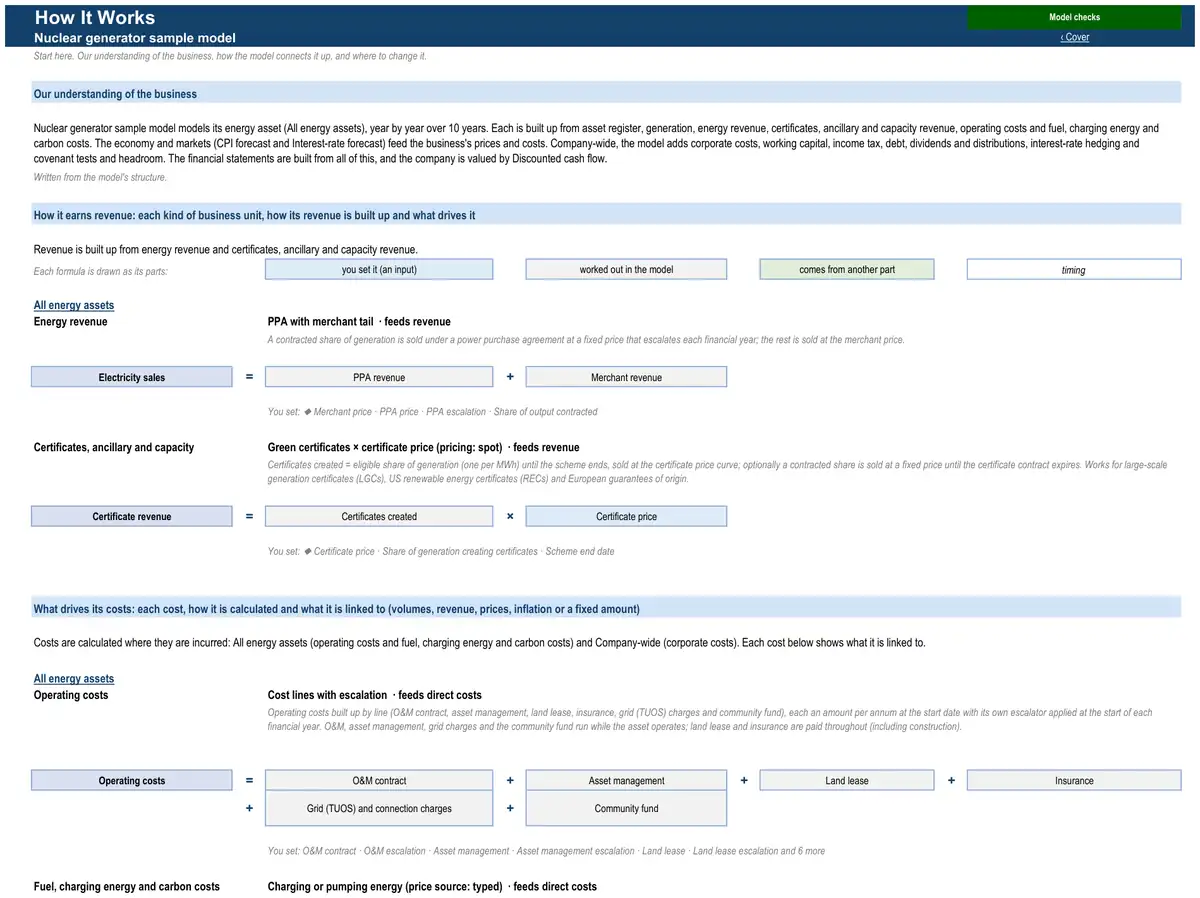
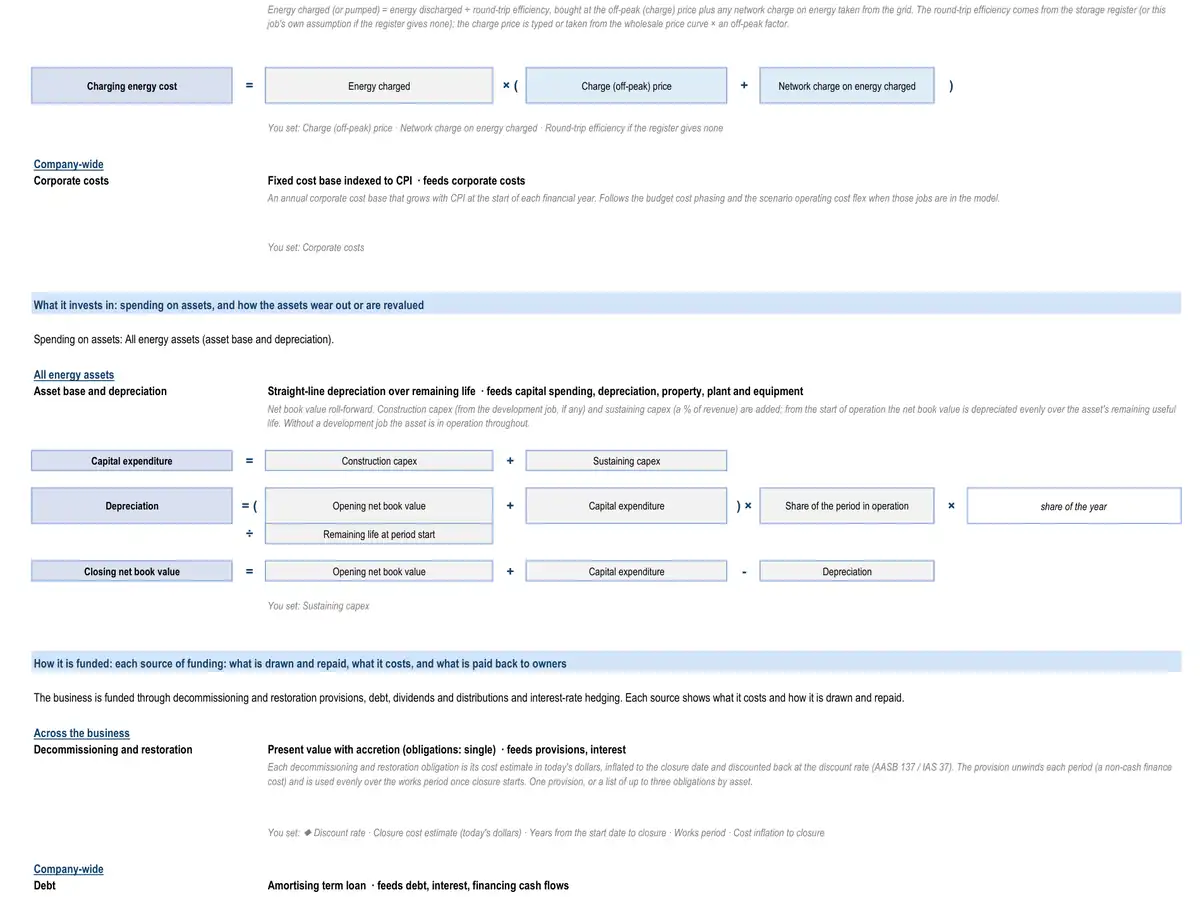
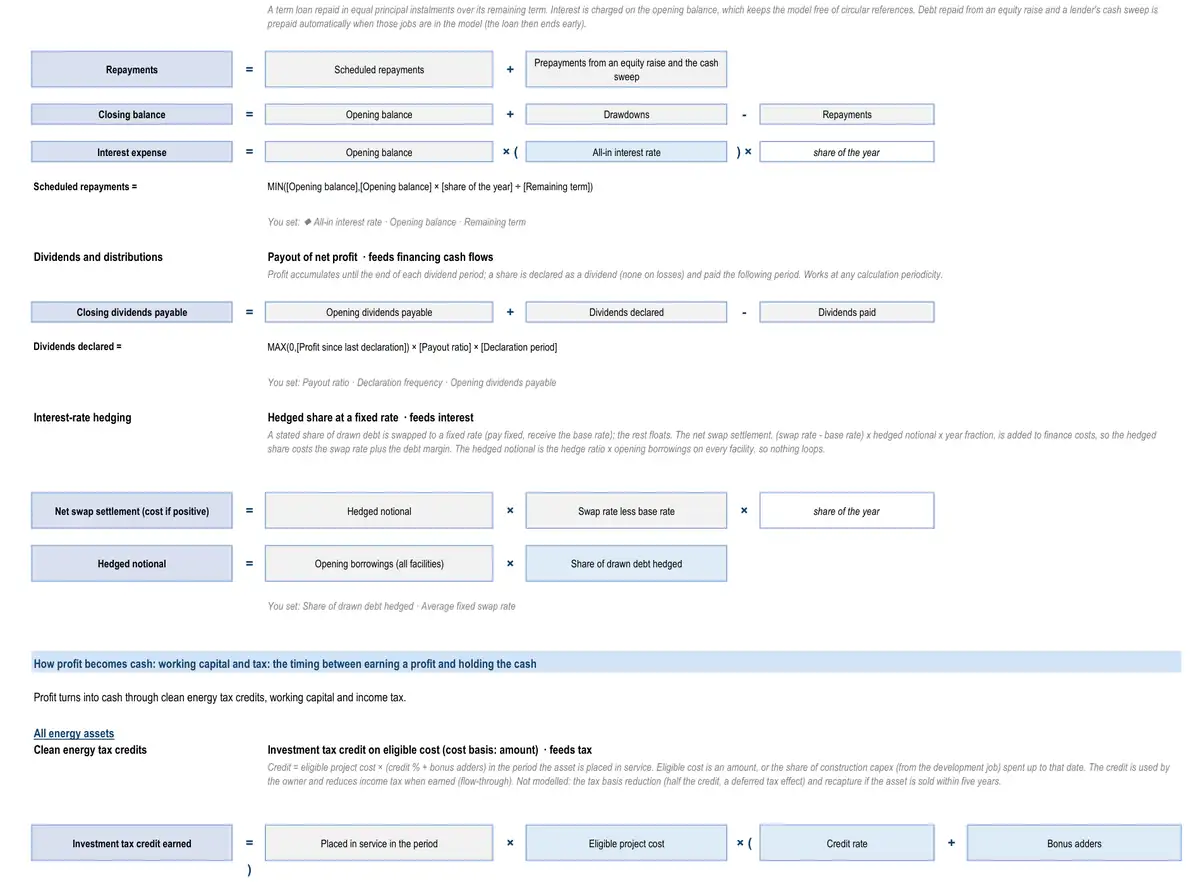
The sample describes no real business. Yours is calibrated to your own figures, so its results are your business’s.
How the model works for a nuclear generator.
- How it earns revenue2 formulasEnergy revenue · All energy assetsElectricity salesPPA revenueMerchant revenueCertificates, ancillary and capacity revenue · All energy assetsCertificate revenueCertificates createdCertificate price
- What drives its costs2 formulasOperating costs · All energy assetsOperating costsO&M contractAsset managementLand leaseInsuranceGrid (TUOS) and connection chargesCommunity fundFuel, charging energy and carbon costs · All energy assetsCharging energy costEnergy chargedCharge (off-peak) priceNetwork charge on energy charged
- What it invests in3 formulasAsset base and depreciation · All energy assetsCapital expenditureConstruction capexSustaining capexAsset base and depreciation · All energy assetsDepreciationOpening net book valueCapital expenditureShare of the period in operationshare of the yearRemaining life at period startAsset base and depreciation · All energy assetsClosing net book valueOpening net book valueCapital expenditureDepreciation
- How it is funded3 formulasDebtRepaymentsScheduled repaymentsPrepayments from an equity raise and the cash sweepDebtClosing balanceOpening balanceDrawdownsRepaymentsDebtInterest expenseOpening balanceAll-in interest rateshare of the year
- How profit becomes cash3 formulasClean energy tax credits · All energy assetsInvestment tax credit earnedPlaced in service in the periodEligible project costCredit rateBonus addersWorking capitalTrade receivablesRevenuefrom statementsDebtor daysDays in periodWorking capitalInventoryDirect costs (positive)from statementsInventory daysDays in period
23 parts, each one tested.
Every part is a tested building block with its own checks: yours is put together from the ones your business needs.
- CPI forecastConsensus curve with long-run anchor
- Corporate costsFixed cost base indexed to CPI
- Working capitalFull working capital
- Income taxCorporate rate with tax losses
- DebtAmortising term loan
- Dividends and distributionsPayout of net profit
- Discounted cash flow valuationDCF on free cash flow to the firm
- Wholesale electricity price curveAdviser price curveThe wholesale electricity price forecast used by the revenue and cost parts that need it.
- Decommissioning and restoration provisionsPresent value with accretionProvisions to remove generation assets, abandon wells and restore sites — recognition, unwinding and spend.
- Energy and utility KPIsGeneration unit metricsThe ratios investors and lenders use to judge energy and utility businesses.
- Interest-rate hedgingHedged share at a fixed rate
- Key-metric summaryLast-twelve-month and run-rate metrics
- Covenant tests and headroomLVR, gearing and ICR for property
- Discount rate (WACC)CAPM at target gearing
- Interest-rate forecastMarket forward curve
- Clean energy tax creditsInvestment tax credit on eligible costProduction and investment tax credits earned by an asset, whether used by the owner, sold to a third party or allocated to a tax equity investor.
- Asset registerEnergy asset registerThe facts every other part of the model builds on — capacity, opening book value and remaining life.
- GenerationStorage cycles and state of healthElectricity sent out (or discharged) by each asset in each period.
- Energy revenuePPA with merchant tailRevenue from selling electricity (or discharging storage) under contracts and in the wholesale market.
- Operating costsCost lines with escalationSite operating costs — O&M, asset management, land lease, insurance, grid charges and community payments.
- Asset base and depreciationStraight-line depreciation over remaining lifeSustaining and replacement capex and depreciation of each asset's property, plant and equipment.
- Certificates, ancillary and capacity revenueGreen certificates × certificate priceRevenue beyond energy sales — green certificates, frequency control and other ancillary services, and capacity or support payments.
- Fuel, charging energy and carbon costsCharging or pumping energyVariable cost of the energy an asset consumes — gas, coal, charging or pumping electricity, electrolyser power — and its carbon cost.
The numbers it tracks.
- 01capacity factor
- 02refuelling outage days
- 03fuel cost per MWh
- 04opex per MWh
- 05decommissioning trust funding
- 06EBITDA
What it is used for.
- Operating forecastGuide · Financial projections
- Budget and rolling forecastGuide · Cash flow forecast
- ValuationGuide · DCF valuation model
- Lending and credit analysisGuide · Three-statement model
- Merger or acquisition (strategic)Guide · Financial modelling services
- Scenarios and sensitivities
More in power generation and renewables.
- Solar and wind farm financial model
- Battery storage project financial model
- Hydro power station financial model
- Gas-fired power station financial model
- Offshore wind farm financial model
- Geothermal generator financial model
- Waste-to-energy plant financial model
- Bioenergy producer financial model
- Hydrogen producer financial model
- Renewable energy developer financial model
- Carbon credit project financial model
Looking for a nuclear generator financial model template? Ours arrives built for your business, with your figures in it.
See a finished model, sheet by sheetThe sample is built on illustrative figures and describes no real business. Models are calculations prepared from the information you provide. They are not financial advice and must be independently verified. See our terms.